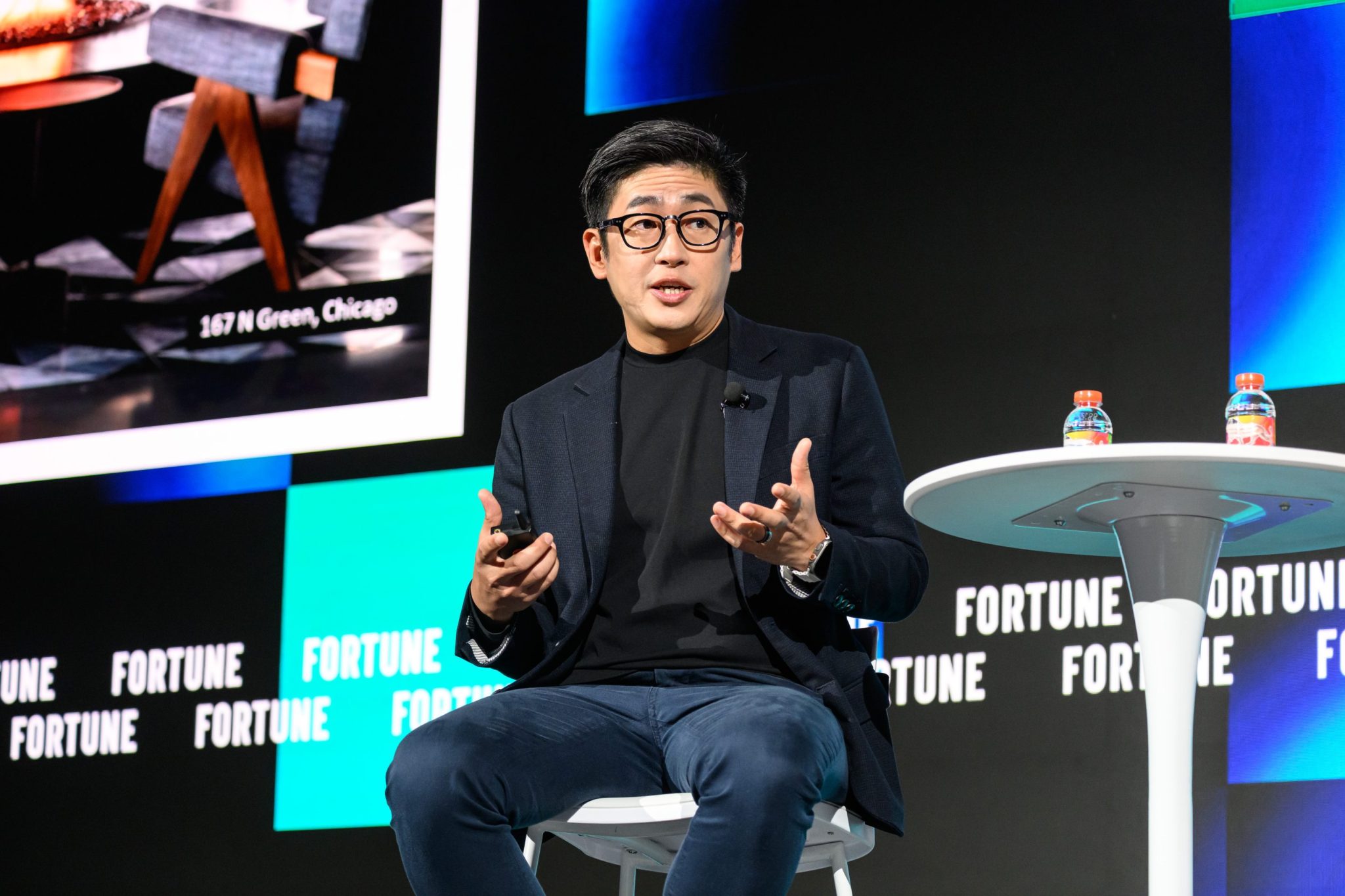
What do both employees and employers really want in a workplace of the future? It’s a topic that came up last week in my conversations with CEOs, designers, and thought leaders at Fortune’s Brainstorm Design conference in Macau.
If you ask Ray Yuen, office managing director at the design and architecture firm Gensler, the answer is food. A recent Gensler survey asked employees to rank the office spaces that were most important to them. The top three? The office food hall, cafe, or lounge.
“It’s really about food and wellness,” Yuen said onstage. “They didn’t even mention anything about work. Everybody just picked the stuff that we really want as human beings.”
It’s worth listening to these human desires as companies try to bring people back into the office, Yuen said. He described a project he worked on recently for a large company’s new Tokyo headquarters, where 50% of the company’s employees were working remotely and he was tasked with finding a way to bring them back. One of the biggest successes was a lo-fi vinyl listening bar, where no tech or talking was allowed, he said.
Flexibility is also key. In the past, Yuen said he used to heavily design about 80% of a company’s headquarters with built in furniture and modules like cubicles, and leave about 20% as “flexible space.” Now, the balance is more 50/50, so companies can transform their office spaces easily when needs arise, such as an office happy hour, he says.
“We’re no longer just designing workplaces. We’re actually designing experiences. Because [employees may] think, ‘Well, if I can work anywhere, why do I want to go to work? I can do it at home,’” Yuen said. “You’ve really got to make the campus or the workplace be more than work, and that’s the fun part of it.”
Kristin Stoller
Editorial Director, Fortune Live Media
kristin.stoller@fortune.com
Around the Table
A round-up of the most important HR headlines.
Employers used to frown on social media posting during work hours, but now employees at companies including Starbucks and Delta are being asked to post on-the-job social media content. Wall Street Journal
The U.S. Equal Employment Opportunity Commission, or EEOC, is reportedly blocking or stalling claims brought by transgender workers. Bloomberg
As automated systems come under fire for potentially allowing discriminating hiring practices, many states are expanding bans on discrimination to AI. Washington Post
Watercooler
Everything you need to know from Fortune.
Meeting shakeup. Instagram’s CEO is calling employees back to the office five days a week, but is canceling all unnecessary recurring meetings —Marco Quiroz-Gutierrez
Earnings report. In the U.K., Gen Z college graduates are earning 30% less than Millennials did at the same stage of life. —Preston Fore
Trade troubles. As Gen Zers opt for trade schools and blue-collar jobs, there is one sector they are hesitant to get involved in: manufacturing. —Emma Burleigh
Credit: Source link