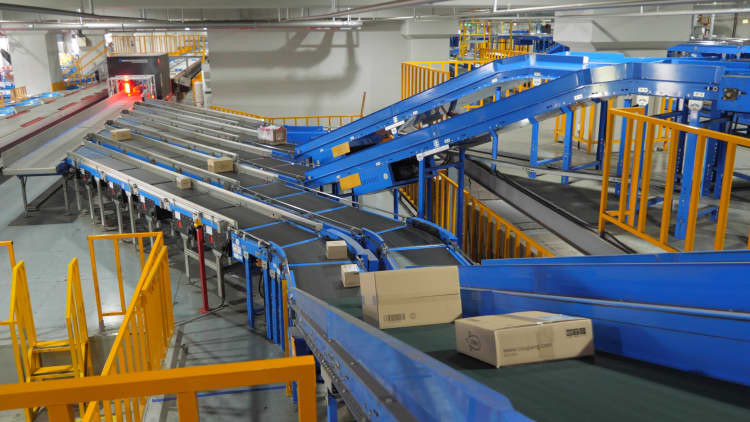
Zepto isn’t the only quick commerce startup in India, and competition is heating up both domestically and globally. The country’s online grocery market is set to be worth around $24 billion dollars by 2025, according to Redseer.
Zepto
Indian quick-commerce startup Zepto has confidentially filed for an initial public offering, according to a public notice issued by the company on Sunday.
The company plans to raise 110 billion rupees ($1.22 billion) of fresh capital. Zepto was valued at $7 billion during its last funding round in October, data from research firm Tracxn showed.
Zepto told CNBC it filed its draft prospectus under the confidential route, which keeps its filings private, and declined to disclose further details.
Rising competition
Quick commerce, which promises deliveries in as little as 10 minutes, has become one of India’s most competitive consumer internet sectors.
While e-commerce giant Amazon has long offered same-day delivery services in India through “Amazon Fresh”, the launch of its 15-minute “Amazon Now” service in June marked an aggressive shift into a crowded space.
The Jeff Bezos-owned U.S. company has started its quick commerce operations across Indian’s three major cities—Mumbai, Delhi and Bengaluru.
Amazon India’s Country Manager Samir Kumar said on Dec. 1, that it plans to have well over 300 micro-fulfillment centers across Bengaluru, Delhi and Mumbai by the end of the year.
“India’s quick commerce market is currently 10% of its e-commerce market, but in the medium to long term it could account for 40%-50%,” Karan Taurani, executive vice president at Indian broking firm Elara Capital, told CNBC’s Inside India last week.
Walmart-owned Flipkart also launched its quick commerce service in 2024. Indian food delivery companies, Swiggy and Eternal, which owns Zomato and Blinkit, were among the first movers in this space.
Over the last three to five years, several companies have entered the quick commerce market in India and are ” indulging in a price war” as firms chase a large total addressable market, Taurani said.

Bubble concerns
The sector has continued to attract large sums of capital. Earlier this month, Swiggy raised 100 billion rupees from institutional investors to expand its quick commerce fulfilment network, including warehouses located closer to dense neighborhoods.
But some industry leaders have warned that the pace of spending may not be sustainable.
Blinkit Chief Executive Albinder Dhindsa has reportedly warned of a bubble bursting.
He told Bloomberg that the quick commerce industry has relied heavily on “relentless fundraising” to cover steep losses and that companies would soon face limits on how long they can continue absorbing them.
Zepto’s losses reportedly widened in fiscal year 2025 to 33.67 billion rupees from 12.15 billion rupees a year ago.
Data from LSEG showed that Swiggy reported a net loss of 31.17 billion rupees in FY25, up from 23.50 billion rupees the year before, while Eternal reported net income of 5.27 billion rupees in FY25.
“If companies don’t move to the path of profitability, there could be a bubble,” Taurani said.
Credit: Source link