Key takeaways:
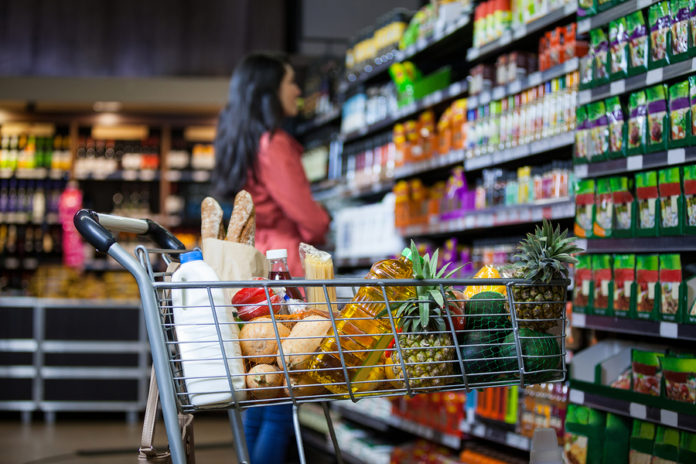
- Three-quarters of grocery purchases are habitual repeats, leaving CPG brands fighting for just 26% of cart space devoted to trial.
- Food manufacturers face the highest switching barriers of any category, requiring discounts exceeding 25% to convince shoppers to try something new.
- Premium “better-for-you” products represent a growth opportunity, but only when paired with promotional incentives that justify the price premium.
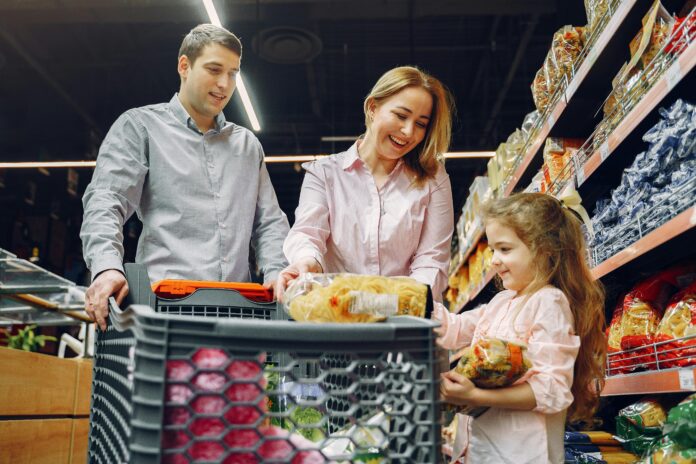
After years of economic uncertainty, shoppers have locked in their routines. Ibotta’s 2026 State of Spend report, based on a survey of 5,000 U.S. grocery buyers, found that 74% of items in the average cart are products consumers have purchased before. Once shoppers find products/brands they like, 76% stay loyal.
For CPG brands, this means the entire growth opportunity exists within the remaining 26% of the cart. The good news is a single successful trial is often enough to convert a new buyer into a repeat customer.
Food faces the highest switching friction
Breaking into that 26% won’t be easy. Food and beverage products showed the highest consumer resistance to brand switching across all categories surveyed. Shoppers indicated they need promotional incentives exceeding 25% off to consider trying an unfamiliar food brand.
This switching friction exists because food purchases involve both essential items (where consumers trade down 47% of the time when prices rise) and emotional factors like taste preference and family routines.
Private label closes the quality gap
Nearly half (44%) of consumers report buying more store brands than a year ago, and 88% plan to maintain or increase private label purchases in 2026. The perception that national brands offer superior quality fell from 44% to 38% year-over-year, with 62% of food shoppers now trusting store brand quality as much as name brands.
When asked what would drive them back to national brands, 48% of private label switchers cited price parity as the primary factor.
The premium path forward
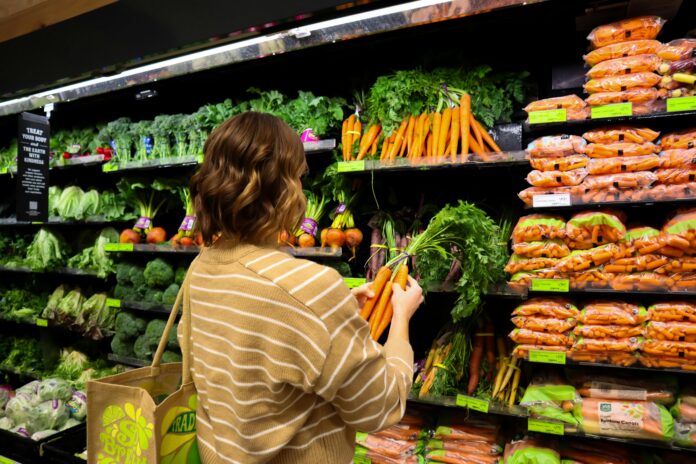
Despite price sensitivity, a clear growth opportunity exists in “better-for-you” products. Currently, 47% of food shoppers actively seek healthier options even at higher costs, and 52% plan to prioritize these purchases in 2026. Another 18% who aren’t currently buying better-for-you products plan to start.
In addition, consumers feel justified buying premium items when they receive promotional value. Over 50% of food shoppers said cash back offers make them comfortable purchasing higher-end products, validating a strategy that pairs premiumization with strategic discounting.
Digital promotions are an expectation
Digital coupons and cash back are now the most-used savings method (64% of shoppers), surpassing even in-store sales. More critically, 56% of consumers now expect brands to offer digital promotions as standard practice.
When promotions successfully introduce shoppers to new products, conversion rates hit 68%, making this investment the most direct path to breaking into the habitual cart.
See Ibotta’s full State of Spend report for more consumer trends and insights.

Credit: Source link