President Donald Trump has framed the U.S. trade deficit as a “national emergency” and a threat to Americans’ “way of life” throughout his second term. It was why he invoked the International Emergency Economic Powers Act in April 2025 to announce “Liberation Day” and reciprocal tariffs around most of the world (the Supreme Court didn’t agree with him that it was quite the emergency that he claimed).
As Trump scrambles to reassemble his signature policy to rebut his decadeslong obsession with trade, some observers argue that he has conflated America’s trade problems with a very different kind of crisis.
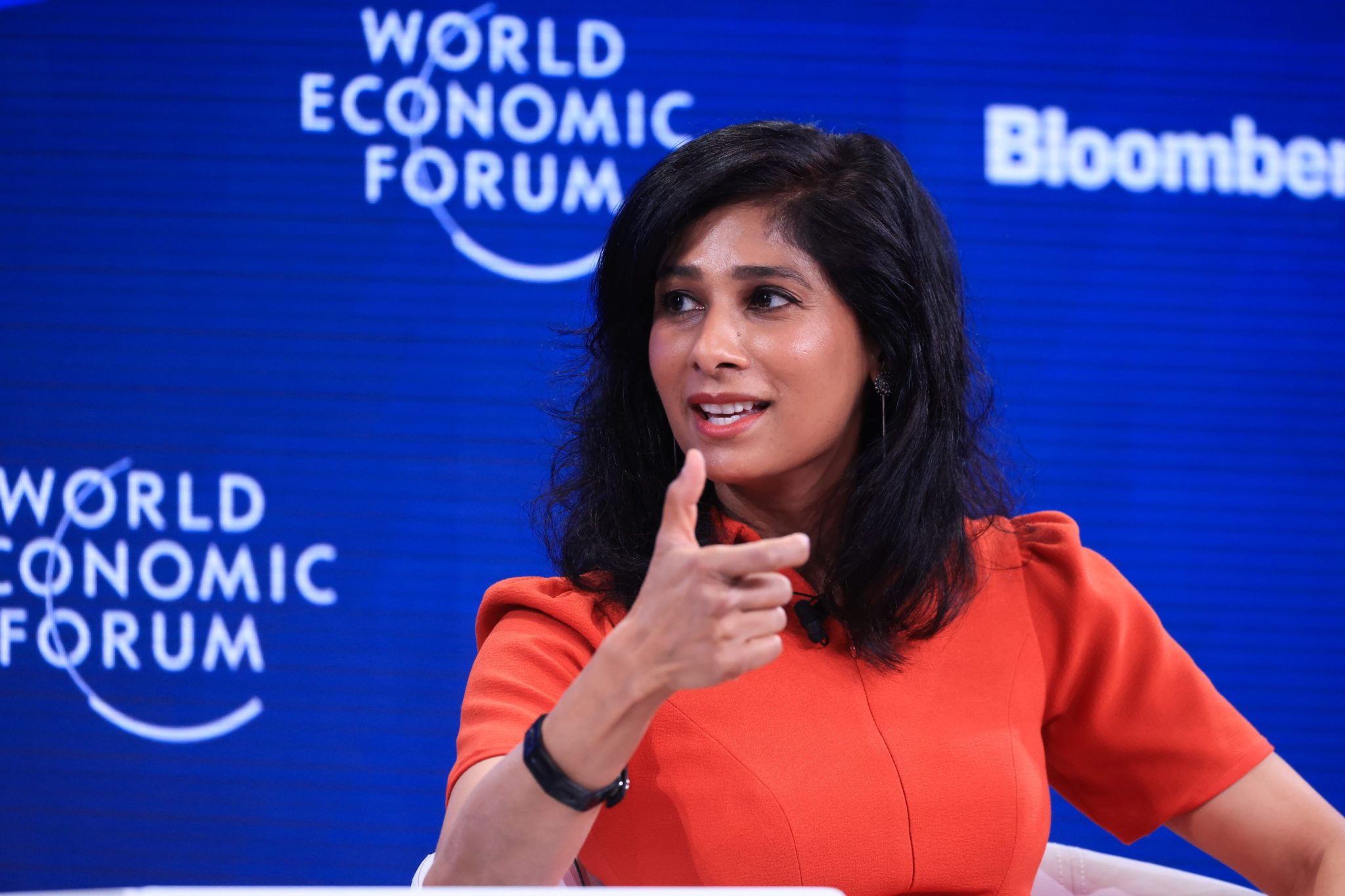
The U.S. trade deficit—a measure of how much more value a country imports rather than exports—stood at around $901 billion last year, meaning that the U.S. is effectively spending much more than it is earning when it comes to trade. But it’s only a crisis if you can’t afford to pay, according to Gita Gopinath, the former chief economist at the International Monetary Fund.
“U.S. trade deficits are large and need to be brought down. Reducing U.S. fiscal deficits is important. At the same time, there is no doubt in the US ability to pay the world and therefore no crisis,” Gita Gopinath, now a Harvard professor, wrote in an X thread Tuesday.
The wrong treatment
To balance the books with the rest of the world, America’s trade shortfalls have to be matched by foreign investment into U.S. assets. The U.S. has run a trade deficit for most of the past 50 years, but has never had a fiscal crisis related to this imbalance because international investors have kept buying up U.S. assets throughout that period, from government debt to real estate to equities.
If the U.S. were to lose investor confidence abroad, then foreign exchange reserves might run dry and the country would no longer be able to service its international debt. That outcome, known as a balance-of-payments crisis, would be an enormously more challenging problem than a long-running trade deficit, Gopinath said.
“The difference is similar to suffering from chronically high cholesterol versus having a heart attack,” she wrote, adding that right now, the U.S. is dealing with “high cholesterol but not a heart attack.”
The last time the U.S. had such a “heart attack” was in the early 1970s, when President Richard Nixon took the U.S. off the gold standard. Since the Bretton Woods’ monetary system came into place following the second World War, the U.S. dollar had been the world’s reserve currency but its value had remained pegged to gold, which was convertible to dollars at a fixed rate. Throughout the 1960s, the foreign-held supply of dollars had eclipsed the supply of U.S.-held gold, making the country vulnerable to a gold run and a loss of investor confidence. Efforts to patch up the system proved unsuccessful, and Nixon eventually announced the end of dollar convertibility to gold in 1971.
Trump doubles down
Since the Supreme Court ruled the bulk of Trump’s tariffs illegal, his administration has reframed the country’s trade deficit as a balance-of-payments crisis. Hours after the justices announced their decision, Trump hit back and promised to install up to 15% tariffs across the board, authorized under Section 122 of the 1974 Trade Act, a provision that allows presidents to invoke tariffs for 150 days in response to “fundamental international payments problems,” which Trump explicitly referred to in his announcement of the new temporary tariffs.
Several commentators, including Gopinath and the libertarian-leaning Cato Institute, have argued that the current trade deficit in the U.S. does not equate to a balance-of-payments crisis. Or, to extend Gopinath’s metaphor, the U.S. is showing up to the proverbial doctor’s office, claiming symptoms of a heart attack, when it really just needs to change its diet and maybe go on a statin.
Even Trump’s own lawyers have seemed to agree that this crisis isn’t one of balance of payments. Last year, when the president’s emergency tariffs were first being litigated in court, the Justice Department justified their use in part because Section 122 tariffs would not apply, they argued.
Another prominent economic voice, hedge fund billionaire Ray Dalio, the founder of Bridgewater Associates, has been fond of the “economic heart attack” metaphor for years. In September, he predicted that the U.S. will face one in the next two to three years, but not from trade. Instead, he sees the national debt inducing cardiac arrest, brought on by Trump’s policies of cutting taxes to a greater extent than any tariff revenue being produced (notwithstanding anything that Trump has to refund as a result of the Supreme Court ruling).
Even if Trump is able to keep tariffs in place, economists are skeptical that his strict trade regimen will do much to reduce the deficit. Nobel Prize-winner Paul Krugman and researchers at the Peterson Institute for International Economics have all argued that any tariff-driven decline in imports is usually accompanied by fewer exports as well. That is because the increased need for domestic production tends to draw resources away from exports.
Both argue that a trade deficit is normally best addressed through domestic fiscal mechanisms rather than trade policy, specifically by cutting spending or raising taxes to balance the national deficit. This would raise savings at home and reduce reliance on capital flows from abroad. But it looks unlikely that Trump will be any more successful than previous presidents in reducing the national debt. His signature One Big Beautiful Bill policy package last year might add anywhere from $19 trillion to $32 trillion to the deficit over the next 30 years, making a debt heart attack as prophesied by Dalio all the more likely.
Despite Trump’s bombastic claims about the positive effect of tariffs—recently claiming they had reduced the deficit by 78%—official evidence during his first year back in office suggest a negligible impact. The trade deficit last year was $2.1 billion smaller than in 2024, or 0.2%, the Bureau of Economic Analysis announced last week. As Gopinath suggested on X, it is unclear whether his new replacement tariffs will have a different effect.
“A 150-day tariff cannot reduce persistent trade deficits and the U.S. is not having a heart attack,” she wrote.
Credit: Source link