President Donald Trump’s plans to restore Venezuela’s beleaguered oil industry faces a series of challenges that will cost U.S. oil companies many billions of dollars to overcome.
Over the weekend, U.S. forces arrested Venezuelan President Nicolas Maduro on drug trafficking charges, with Trump claiming the U.S. would “run” the country and take over the country’s nationalized oil reserves.
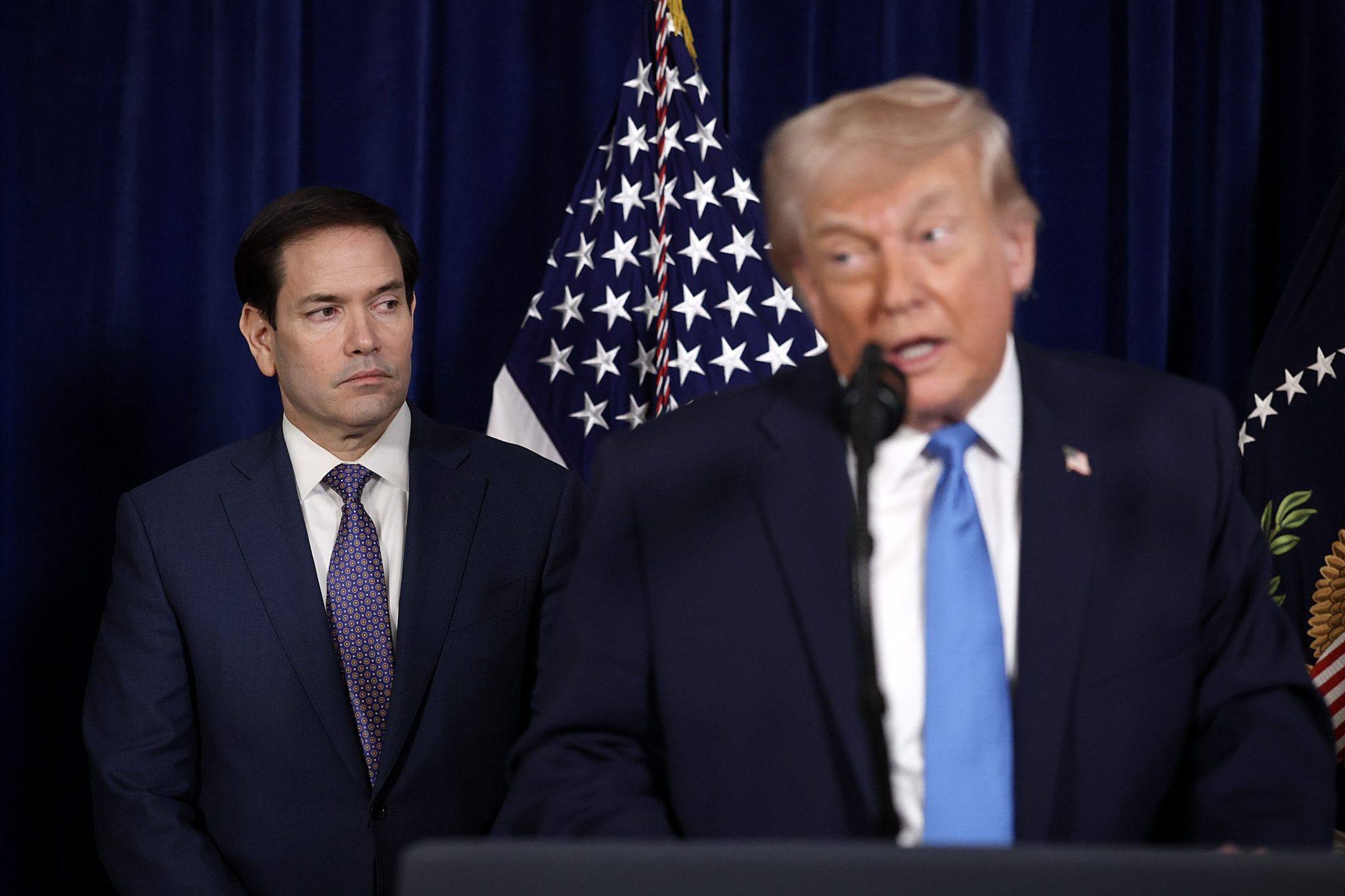
“American dominance in the western hemisphere will never be questioned again. Won’t happen,” Trump said on Saturday, while explicitly endorsing the “Donroe doctrine,” a social media meme/portmanteau that describes the retro-nostalgic version of imperial authority increasingly on display in his second term. The Monroe Doctrine meets the Donald.
The move follows a series of deadly strikes on Venezuelan boats supposedly carrying drugs, attacks widely considered to be illegal. The United Nations Secretary General António Guterres, the body’s top official, called Trump’s ousting of Maduro a violation of the UN’s charter.
Home to the world’s largest oil reserves, Venezuela reached its output peak in the 1970s, producing more than 3.5 million barrels of oil daily, though production has significantly tapered off to about 1 million barrels daily. Analysts have high hopes that oil companies entering Venezuela can tap back into the country’s black gold. JPMorgan predicted that with control of Venezuela’s oil, the U.S. could hold 30% of the world’s oil reserves. Other analysts said the country could double or triple its current output, returning it to its highs from 50 years ago, quite quickly.
But experts warn that the path to dominance, at least as far as oil is concerned, will be an uphill battle following decades of mismanagement and sanctions. State-owned oil giant Petróleos de Venezuela S.A. (PDVSA) collapsed in the mid-2010s following the loss of foreign financial support, as well as skilled workers to maintain pipelines. In 2017, the first Trump administration escalated oil sanctions on Venezuela, restricting the country’s access to U.S. markets.
Small war, big questions
According to Helima Croft, head of global commodity strategy at RBC Capital Markets, oil companies’ efforts to grow production, such as rebuilding infrastructure, would take about a decade. She wrote in a note to investors on Saturday that according to oil executives, these efforts will cost $10 billion annually, bringing total investments over the next 10 years to about $100 billion.
Part of those steep rebuilding costs are also a result of the need to extract and refine heavy crude oil, which makes up about 75% of Venezuela’s reserve, most of which is in the Orinoco Belt. Venezuela’s oil boom of yesteryear was also a result of light crude oil found in the oilfields of western Venezuela, which was easy to access and therefore were depleted quickly. While heavy crude oil is what is predominantly being drilled for today, its viscous consistency and high levels of metals and sulfur mean extracting and refining this product is significantly more costly than its light crude counterpart.
The mass undertaking to restore the Venezuelan oil industry to its peak means oil prices are unlikely to budge anytime soon, said Miguel Tinker Salas, a professor emeritus of history at Paloma College and author of The Enduring Legacy: Oil, Culture, and Society in Venezuela. It’s a hit to Trump’s “drill baby, drill” vision and, according to the historian, the president’s hope of gaining momentum ahead of the midterm elections.
“The notion that Venezuela has the largest reserves of oil in the world—303 billion barrels of oil [in reserve]—may be a stimulant in trying to get the price of oil to drop for potentially his own electoral purposes,” Tinker Salas told Fortune. “Although [Trump] is grossly mistaken if he thinks that Venezuelan oil comes online tomorrow and will affect prices of oil before the election.”
Several other analysts see more than a little bit of midterm maneuvering behind the U.S. strike on Venezuela, given the offyear rout that Republicans suffered in 2025 and Trump’s dismal poll ratings. Macquarie’s global analysts Viktor Shvets and Kyle Liu noted that their 2026 outlook included “start a small war” as one policy the Republicans could pursue to avoid a “meltdown” in the midterms. Maduro’s capture is about oil and the Monroe Doctrine, they added, but it also strengthens the Republican Party’s “tough on crime and drugs” image.
Elsewhere, UBS chief economist Paul Donovan argued in a Monday podcast that perceptions of “affordability” seem to have shaped U.S. administration policy over the past few weeks. He noted two tariff decisions in particular: a delay on a furniture levy, and a cut on planned fees for tariffs on Italian pasta.
“The weekend’s action in Venezuela also raises fiscal questions,” he wrote. “It is not clear how, if at all, the US intends to ‘run’ Venezuela but military adventures carry a fiscal cost. Despite the noise of social media warriors, geopolitical considerations are likely to concern investors less.”
Risks of political instability
The factors influencing U.S. oil companies go beyond just the infrastructure challenges plaguing the industry in Venezuela. According to RBC Capital Markets’ Croft, increasing oil production will hinge on companies feeling confident about the safety of setting up shop in Venezuela. That begins with who will be leading the country moving forward.
That individual will likely not be Nobel Peace Prize winner and opposition leader María Corina Machado, whom Trump said lacked support to fill the role; nor will it be Edmundo González, who ran against Maduro in the 2024 election, which was considered to be the fair winner of the election. González is in a self-imposed exile in Spain. Delcy Rodriguez, Maduro’s vice president, was sworn in as Venezuela’s interim president on Monday.
“We don’t really know who’s in charge, who is going to be running Venezuela,” Croft told CNBC on Monday.
The U.S. will also have to learn from its past efforts to build up authority in the oil-rich countries of Iraq and Libya. Both endeavors included attempts to depose the countries’ respective leaders that led to political collapse and civil unrest.
“We thought Libya was going to be an easy turnaround, post-[former Libyan Prime Minister Muammar] Gaddafi,” Croft said. “So the question is, What’s our template for a rapid recovery of an oil sector that has suffered decades of decline and mismanagement?”
Tinker Salas argued that other factors, including an improvement in technology to extract low crude oil, could expedite production, but until there’s evidence that companies can thrive in Venezuela, there will likely be few efforts to escalate drilling.
“I don’t think any large U.S. major company is going to want to invest without a series of guarantees, because you’re talking about billions of dollars of investment,” Tinker Salas said. “This is an investment for the long term, not for the short term.”
Macquarie’s Shvets and Liu added an ominous warning for the long term of U.S. foreign policy, writing, that this is “another nail in the coffin of [the] global rules-based order,” marginalizing the UN “similar to the League of Nations circa 1930s.” The League of Nations was the forerunner to the UN and is famous among historians for its formation after the wreckage of World War I and its almost immediate failure to prevent the rise of authoritarianism in the 1930s that gave way to World War II.
This could also signal that the Church Committee rules may be “obsolete,” the Macquarie analysts wrote, referring to the regulations in place since 1975 to address abuses intelligence revealed during the Vietnam era. The CIA reportedly played a critical role in ensuring the success of this military action in Venezuela, after all.
A strong Republican midterm showing would reinforce the “unitary system of governance,” on the one hand, but Macquarie argued that it would likely further erode the “few remaining semi-independent agencies (principally the Fed).” Right on cue, a new Federal Reserve chairman is expected to be selected in the coming days.
This story was originally featured on Fortune.com
Credit: Source link