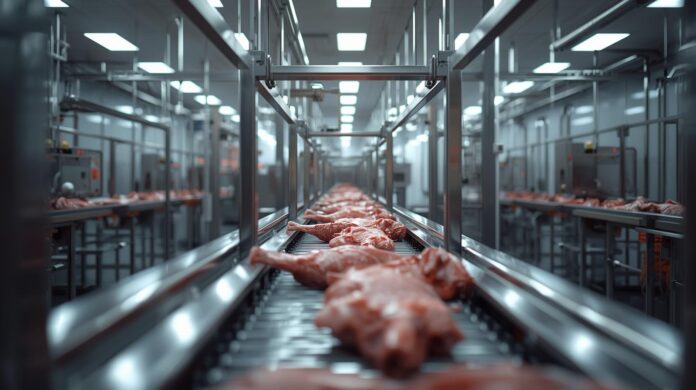
Key takeaways:
- Meat and poultry plants change the rules of digitization, as temperature swings, moisture, and sanitation needs influence what technology can realistically survive and how it should be installed.
- Many digital initiatives stumble not because the idea is wrong, but because washdown realities, connectivity gaps, and hygienic design details weren’t built into the plan early.
- Leading processors tend to phase transformation, starting with resilient data capture and critical food-safety visibility, then expanding into optimization and automation as the foundation proves dependable.
By now, digital transformation in food manufacturing is a familiar journey: connect equipment, collect data, build dashboards, apply analytics, and automate. In meat and poultry processing, that same destination may apply, but the route is a little different.
That’s not because plants lack capability or ambition. The complexity comes from day-to-day operating conditions that are simply harsher than many other manufacturing environments. There are frequent washdowns, cold rooms and condensation, aggressive chemicals, and the constant priority of sanitation. Add regulatory expectations for trustworthy records and audit readiness, and you get a setting where technology choices have to be unusually practical.
Let’s take a look at how leadership teams can plan Industry 4.0 in a way that fits the plant, the product, and the compliance context, grounded in the realities of meat and poultry operations.
Plant conditions change the rules of digitization
In many facilities, digitization can start with an off-the-shelf sensor, a tablet on a cart, and a quick wireless network extension. In a meat or poultry plant, the environment pushes back:
- Temperature and humidity can create condensation on enclosures, cables, and connectors.
- Sanitation cycles introduce high-pressure water, foaming, and chemical exposure.
- Hygienic design expectations shape what can be mounted where and how it must be cleaned.
- Downtime tolerance is low; line interruptions are expensive and disruptive.
While these conditions don’t make digital transformation impossible, they require reliability and hygienic installation practices to be designed in from the beginning rather than bolted on after the pilot.
What makes meat processing uniquely complex
Harsh environments
Washdown zones and cold rooms are hard on electronics. Water ingress, seal failures, corrosion, and cable jacket deterioration can turn a small data-collection project into an ongoing maintenance headache.
This is one reason meat processing automation and digital systems are often described as technically challenging. Product variability is high, and the environment is demanding at the same time. Research reviewing automation in meat processing highlights “harsh environment” constraints alongside variability and space limitations as real barriers to practical deployment.
Leader-level implication: The business case for digitization should include the cost of making solutions survivable (e.g., enclosures, connectors, mounting design, spare strategy).
Sanitation constraints
Deciding where to install equipment is more than an engineering question in meat and poultry. It’s also a sanitation and food-safety question.
Common friction points include:
- Cleanability: If a device, bracket, or cable route creates a niche that is hard to clean, it can become a non-starter, regardless of how valuable the data is.
- Cleaning methods: Clean-in-place (CIP) systems and clean-out-of-place (COP) processes influence what can be instrumented and how often it can be serviced without disrupting sanitation routines.
Recent sanitation-focused research notes manufacturers are adapting sanitation practices and placing emphasis on hygienic machine design, including interest in digital monitoring and digital-ready sanitation features.
Leader-level implication: Digital projects need sanitation ownership early, not as a sign-off step, but more like a co-design partner.
Line speed and uptime pressure
Even the best digital tools struggle if they require:
- Frequent recalibration
- Complex login steps at the point of work
- Delicate devices that fail mid-shift
- Shutdowns to troubleshoot basic connectivity
In high-throughput meat and poultry operations, the operating rhythm is critical. Technology has to fit into that rhythm, especially when teams are balancing labor constraints, production targets, and sanitation windows.
Leader-level implication: Prioritize solutions that are maintainable by plant teams, with minimal special handling and clear troubleshooting paths.
Compliance and audit readiness
Meat and poultry processors operate in a USDA context and typically follow HACCP. Digitization intersects with compliance in several ways:
- Record integrity: Digital records should be attributable, legible, and protected from accidental changes.
- Calibration and verification: If a sensor informs a food-safety decision, its reliability and calibration matter.
- Traceability: Data may need to tie back to lots, rework, and specific process conditions.
Leader-level implication: “Collect data” is not the same as “create trustworthy records.” Governance matters, especially for anything tied to food safety or traceability.
Where typical digital initiatives break in meat and poultry plants
When a project struggles, it’s often due to fit, not effort. Here are a few common patterns:
- Consumer-grade hardware (e.g., tablets, scanners, Wi-Fi, sensors) fails in industrial washdown zones despite short-term pilot success. Daily sanitation cycles lead to cracked housings, fogged screens, corroded connectors, and hard-to-reproduce intermittent failures.
- Meat plants are challenging radio environments with metal, equipment, refrigeration, and enclosed spaces causing dead zones. Wired networks also face issues if cabling isn’t selected and routed for washdown and hygiene. A helpful reframing is to treat connectivity as hygienic infrastructure.
- Data capture systems that compromise hygienic design, including sensors or cameras creating sanitation issues or hard-to-clean spots, will not scale in meat and poultry. Data capture must be integrated with hygienic design.
What leading processors do differently
Across the industry, teams that scale digital transformation tend to share a few practical principles:
- Ruggedized, food-appropriate hardware plus hygienic installation standards: Success requires selecting devices suited to their zone and installing them for easy sanitation. This involves washdown-rated, corrosion-resistant hardware; hygienic mounting for drainage; proper cable routing; and a clear zone map. It reflects industry focus on hygienic design, chemical resistance, and digital sanitation monitoring.
- Edge-first data capture for resilience: Edge-first captures and buffers data near the line (edge computing) to keep the system working even with unreliable or offline networks. This approach is ideal for meat and poultry environments because it reduces reliance on perfect plant connectivity, maintains stable data collection despite interference or dead zones, and provides faster local feedback to operators. Simply put, don’t let the production line wait for the cloud.
- Standard work and training embedded in the rollout: Digital tools alter work. Even simple rollouts need job aids, training for shift conditions, a clear troubleshooting escalation path, and feedback loops for post-go-live improvement. This approach respects the fast-paced, hands-on nature of meat and poultry production.
- Governance for data integrity and traceability: In regulated settings, designing for user roles, audit trails, device calibration, source of truth data definition, and consistent lot/batch linkage is helpful. Meat processing automation research highlights that operational complexity and environmental limits are key adoption challenges. Governance is crucial for reducing friction when scaling beyond a pilot.
Innovation opportunities in meat and poultry
Digital transformation isn’t only an operations story. Some of the best opportunities sit at the handoffs.
Validation protocols that match food and sanitation realities
When technology influences food-safety decisions, sanitation verification, or traceability, validation matters. A practical innovation opportunity is to create repeatable validation protocols that answer:
- What good data looks like in this zone
- How the device will be cleaned and inspected
- How accuracy is verified over time
- What happens when the device fails mid-shift
A clearer path to scale
In meat and poultry, scaling often fails when the pilot ignores:
- Zone differences between plants
- Sanitation variation by product and process
- Differences in line speed, layout, and staffing
A scale path can be as simple as:
- A reference architecture
- Approved device lists per zone
- Installation standards
- And a repeatable training and support model
Stronger cross-functional handoffs
New products and process changes (from research and development) often carry new data needs:
- Different critical control points
- New allergen risks
- New sanitation patterns
- New yield sensitivities
Making those handoffs explicit, so operations isn’t discovering requirements after launch, can accelerate both innovation and stability.
If you’re starting (or resetting) in Q1, here’s a high-leverage, digital transformation checklist that may be useful:
- Pick one or two priority outcomes, such as critical control point record consistency, downtime visibility, and yield loss tracking.
- Map your plant by hygiene zones (e.g., washdown, cold rooms, dry areas) and align on what hardware is permitted in each.
- Write simple installation standards for mounting, cable routing, cleanability expectations, and inspection points.
- Select ruggedized devices intentionally for the zones they will live in.
- Plan connectivity as hygienic infrastructure, such as where signals drop, where cables will survive, and how devices get power safely.
- Decide where data is captured first (local/edge vs. centralized) based on reliability needs.
- Define data you can trust, which may include calibration, timestamps, user attribution, and audit trail expectations.
- Build standard work into the rollout (who does what, when, and what happens when something fails).
- Train for shift reality, including short modules, job aids, and multilingual support (if needed).
- Create a support loop, designating who owns issues day-to-day and how updates happen without disrupting sanitation or production.
- Document early wins and friction points so scaling decisions are based on evidence.
- Set a phase gate and expand only after the solution survives sanitation cycles and normal maintenance routines consistently.
Digital transformation in meat and poultry processing can absolutely deliver value, especially when it’s planned with washdown realities, hygienic design, and audit-ready data integrity in mind. The common thread in scalable programs is technology that’s chosen, installed, and governed in a way that fits how meat and poultry plants actually run.
FAQ for food manufacturing leaders
Q: How is digital transformation in meat processing different from other food sectors?
A: Meat and poultry plants often have more intense washdown routines, colder and wetter environments, and stricter constraints on what can be installed where. Those conditions influence technology reliability and hygienic design requirements.
Q: What’s a sensible first use case if we’re early in the journey?
A: Many teams start with critical control point visibility (within HACCP) and simplified digital records, because it supports food-safety documentation while building the data foundation needed for later optimization.
Q: Do we have to modernize the whole plant network before we see value?
A: Not necessarily. Value often appears when a plant improves reliability in one area (like sanitation-related monitoring, downtime visibility, or quality checks), then expands based on what proves durable in real conditions.
Q: What does “edge-first” mean, and why do people talk about it so much?
A: Edge-first means capturing data near the equipment (locally) so it keeps working even if the network drops. In facilities with dead zones, interference, or sanitation constraints on infrastructure, this can make data collection more resilient.
Q: How do we avoid pilots that work briefly but never scale?
A: A common approach is to build zone standards early, involve sanitation and quality in design, and document what it takes to maintain the system during normal operations.
Q: Where should governance start, especially for traceability?
A: Start with definitions: what the “system of record” is for lots, what data must be attributable, how calibration is tracked, and who has permission to change configurations. Governance can begin small and mature as the program grows.

Credit: Source link